
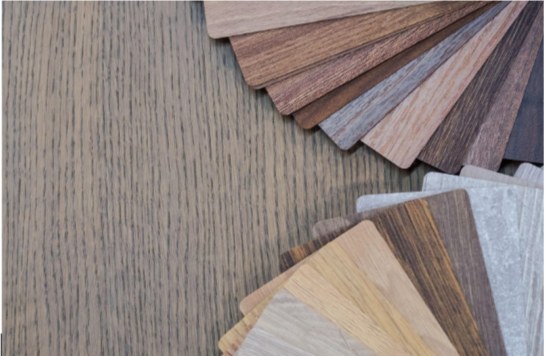
Laminate flooring has revolutionized the home improvement market by offering the aesthetic appeal of hardwood, stone, and tile at a fraction of the cost. This engineered product combines advanced manufacturing technology with practical design to deliver floors that perform admirably in residential and light commercial applications. Understanding laminate flooring’s composition, benefits, and proper installation ensures successful projects that satisfy for years.
The Engineering Behind Laminate Floors
Laminate flooring comprises multiple layers engineered to work together, each contributing specific properties to the finished product. This layered construction creates performance characteristics impossible to achieve with single-material products.
The bottom layer provides stability and moisture resistance, preventing the panel from warping or absorbing humidity from below. This backing layer also dampens sound transmission and contributes to the floor’s overall rigidity.
The core layer, typically high-density fiberboard, provides structural strength and dimensional stability. Core density directly influences durability and resistance to impact damage. Higher-quality products feature denser cores that withstand heavy use without degradation.
The decorative layer contains high-resolution photographic imagery that replicates wood grain, stone patterns, or other designs with remarkable fidelity. Modern printing technology produces visuals nearly indistinguishable from natural materials, with variations between planks that prevent artificial repetitiveness.
The wear layer, a clear melamine resin coating, protects the decorative image from scratches, stains, and fading. Wear layer thickness and formulation determine how well the floor resists daily abuse and maintains its appearance over time.
Advantages Over Traditional Flooring Materials
Laminate flooring offers compelling advantages that explain its market success. Cost savings compared to genuine hardwood often exceed fifty percent while achieving remarkably similar appearances. This value proposition enables design aspirations otherwise beyond budget reach.
Installation simplicity represents another significant advantage. Click-lock joining systems eliminate adhesives and special tools, enabling confident DIY installation that saves labor costs. Floating installation over existing floors avoids demolition mess and expense.
Durability exceeds many expectations, with quality laminates resisting scratches, dents, and wear that would damage softer materials. Busy households with children, pets, and active lifestyles appreciate this resilience.
Maintenance simplicity further recommends laminate flooring. Unlike hardwood requiring periodic refinishing or natural stone needing sealing, laminate demands only regular sweeping and occasional damp mopping. No special products or professional treatments are necessary.
Selecting Appropriate Products
The laminate flooring market spans enormous quality and price ranges, from basic builder-grade products to premium offerings rivaling genuine hardwood costs. Understanding differentiating factors enables appropriate selection for specific applications.
AC ratings standardize wear resistance evaluation, with higher numbers indicating greater durability. AC3 suits residential applications with moderate traffic, while AC4 addresses heavy residential or light commercial use. AC5 handles demanding commercial environments.
Core thickness affects both feel underfoot and durability. Thicker cores provide more substantial floors that resist impact damage and feel less hollow when walked upon. Products eight millimeters and thicker generally satisfy residential expectations.
Exploring options for laminated floats reveals the variety available in contemporary products, from realistic wood reproductions to creative patterns that natural materials cannot achieve.
Visual Options and Design Flexibility
Laminate flooring’s visual range has expanded dramatically beyond basic oak and maple reproductions. Contemporary products replicate exotic woods, reclaimed lumber, concrete, and stone with impressive authenticity.
Texture technology adds tactile dimension to visual patterns. Embossed surfaces feel like actual wood grain or stone texture underfoot, enhancing the illusion of natural materials. Registered embossing aligns texture precisely with printed patterns for maximum realism.
Width and length variations influence visual impact significantly. Narrow strips create traditional appearances, while wide planks project contemporary spaciousness. Extra-long planks minimize end joints, creating seamless expanses particularly effective in larger rooms.
Edge treatments affect how individual planks read within the overall installation. Square edges create smooth, continuous surfaces, while beveled edges emphasize individual planks and add dimensional interest. Preference between these approaches reflects personal aesthetic sensibility.
Preparing for Successful Installation
Proper preparation ensures installation success and long-term performance. Skipping or rushing preparation steps frequently causes problems that undermine otherwise quality materials.
Subfloor assessment identifies conditions that could compromise the installation. Concrete slabs must be tested for moisture, as excessive humidity migrating upward damages laminate flooring over time. Wood subfloors require verification of structural soundness and flatness.
Flatness tolerances for laminate installation require no more than three millimeters variation across a two-meter span. Exceeding this limit causes planks to rock, joints to stress, and eventual clicking or squeaking. Address flatness issues before proceeding with installation.
Acclimation allows flooring materials to adjust to installation environment conditions. Products should rest unopened in the installation space for at least forty-eight hours, allowing them to reach equilibrium with ambient temperature and humidity.
Installation Techniques and Best Practices
Floating installation represents the standard method for laminate floors, with planks joined together but not attached to the subfloor. This approach allows natural expansion and contraction without buckling or gaps.
Underlayment beneath the flooring provides cushioning, sound dampening, and moisture protection. Many products now include attached underlayment, simplifying installation while ensuring consistent performance. Separate underlayments offer opportunities for enhanced properties where desired.
Expansion gaps around perimeter walls and fixed objects accommodate dimensional changes across seasons. These gaps, typically ten to twelve millimeters, hide beneath baseboards and transition strips. Eliminating expansion space invites buckling when humidity increases.
Staggering end joints between rows prevents alignment that weakens the floor and looks artificial. Most manufacturers recommend minimum offset distances, typically thirty centimeters or more, between adjacent row end joints.
Addressing Moisture Concerns
Despite improvements in water resistance, laminate flooring remains vulnerable to moisture damage. The wood-fiber cores absorb water, swelling and potentially delaminating when exposed to standing liquids.
Prompt cleanup of spills prevents moisture penetration through joints. While brief surface contact causes no harm, allowing liquids to pool risks seepage into vulnerable core materials. Establish household habits that address spills immediately.
Bathroom and kitchen installations require extra caution and product selection. Water-resistant laminates with treated cores and tight joints perform adequately in these spaces when properly installed and maintained. However, areas around tubs and showers may better suit fully waterproof alternatives.
Basement installations demand particular attention to moisture management. Concrete slabs below grade emit moisture continuously and may experience periodic water intrusion. Appropriate vapor barriers and moisture testing help ensure successful below-grade installations.
Living With Laminate Floors
Daily life on laminate floors requires modest accommodation to protect your investment. Furniture pads prevent scratches and dents from chair legs and heavy items. Area rugs in high-traffic zones reduce wear concentration that prematurely ages the floor.
Entryway mats capture grit and moisture before they reach laminate surfaces. Abrasive particles tracked indoors act like sandpaper under foot traffic, scratching the protective wear layer. Outdoor doormats and indoor entry rugs work together to minimize this damage.
Temperature and humidity stability benefit laminate floors. Extreme fluctuations cause expansion and contraction that stress joints and may cause gaps or buckling. Maintaining consistent indoor climate through heating and cooling seasons protects both floor appearance and function.
Repair and Replacement Considerations
Minor damage often yields to simple repairs that restore appearance without replacing planks. Repair kits with color-matched fillers address scratches and small chips effectively when applied according to directions.
More significant damage may require plank replacement. Floating installation theoretically allows disassembly and reassembly, though practical difficulties increase with floor age and original installation quality. Working from the nearest wall toward the damaged area, remove planks sequentially, replace the damaged piece, and reinstall.
Keeping leftover material from original installation enables future repairs with perfectly matching replacement planks. Store extras flat in climate-controlled space to maintain their condition for potential future use.
Environmental and Health Perspectives
Laminate flooring’s environmental profile includes both advantages and considerations. Efficient raw material use creates more flooring from fewer forest resources than solid hardwood requires. However, manufacturing processes and resin components warrant evaluation for environmentally conscious consumers.
Emissions from new laminate floors, particularly formaldehyde from adhesives, have attracted regulatory and consumer attention. Low-emission products certified to CARB or similar standards address these concerns while maintaining performance. Verify emission compliance when health considerations influence your selection.
End-of-life disposal presents challenges as laminate flooring resists recycling. The fused layers of different materials complicate separation for material recovery. Consider product lifespan as part of overall environmental impact assessment.
Laminate flooring continues advancing in quality, appearance, and performance with each product generation. Its compelling value proposition ensures continued popularity among homeowners seeking attractive, durable floors without premium hardwood costs.


